South Texas has a new carbon storage project heading into construction.
Ozona CCS and Marubeni Corp. have taken a final investment decision on the Pawnee Carbon Sequestration Project in Bee County, Texas, BIC Magazine reported on October 27, 2026. The project is a 50-50 joint venture between the two companies, and first injection is targeted for the first quarter of 2027.
Pawnee will capture CO₂ from a StarTex Field Services natural gas treating facility, then compress it, transport it and store it permanently underground. Ozona will build and operate the facilities. Marubeni will lead marketing and commercialization of the carbon credits the project generates.
It is not the largest storage project in the United States. It may be one of the more instructive.
A Joint Venture Turns Into a Construction Program
The partnership dates to September 2024, when a Marubeni subsidiary formed a joint venture with Ozona to develop CO₂ storage in the Eagle Ford region of South Texas. Turbomachinery Magazine reported at the time that Marubeni would provide technical and financial support, helping Ozona secure pore space, permit sequestration wells, and engineer and procure facilities and pipelines.
The original plan targeted a final investment decision in early 2025 and operations in the first quarter of 2026. The decision has come later than that schedule. It has come nonetheless.
“Pawnee moves our strategy from development into construction and ultimately operations,” said Rich Adams, chief executive of Ozona.
That shift is the one US carbon management needs to see repeated many times over. Announcements and memorandums of understanding are plentiful. Projects that commit capital, prepare wells and inject CO₂ are what build credibility with emitters, lenders and regulators.
Gas Treating Is a Practical Place to Start
Pawnee draws its CO₂ from natural gas treating, one of the most practical sources available to the industry.
Gas treating plants must strip CO₂ from raw gas before it can be sold. The separated stream is already concentrated, so the most expensive step in many capture projects, pulling dilute CO₂ out of flue gas, largely falls away. What remains is compression, transport and storage.
Ozona’s strategy has pointed in this direction from the start. When the joint venture was formed, the company said it had identified several potential Eagle Ford storage sites and was in talks with large producers to capture CO₂ from natural gas treating plants.
Pawnee turns those conversations into a committed project.
Reusing a Well and Proving the Rock
Two technical details stand out.
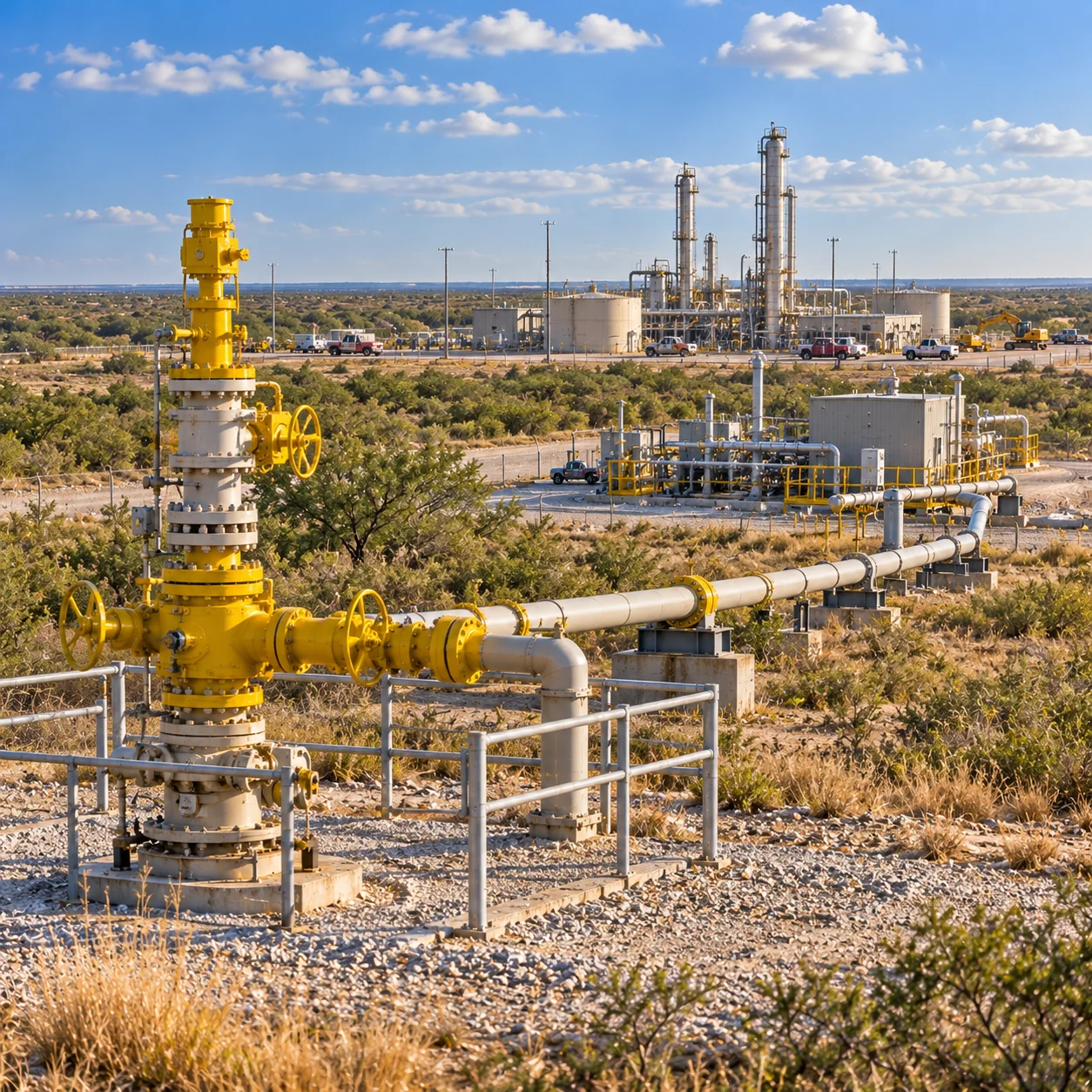
First, the project will repurpose an existing well, O’Neal Gas Unit No. 4, rather than drilling every injection point from scratch. Reusing a wellbore where the integrity case supports it can shorten schedules and reduce capital cost, both of which matter for a project of this size.
Second, an injection test into the Sligo Formation was successful, according to BIC Magazine. Confirming that a reservoir will accept CO₂ is one of the most important steps a storage developer can take before committing capital, and Pawnee took it before the investment decision rather than after.
Potential capacity is about 400,000 metric tons of CO₂ per year. Adams has also indicated that the project could expand as additional CO₂ sources are connected.
Mid-Sized Storage Fills a Gap the Big Hubs Leave
Much of the attention in US carbon management goes to large shared hubs along the Gulf Coast. Those projects matter. The market also needs a layer of mid-sized, source-specific storage that can be built quickly wherever a CO₂ stream and suitable geology sit close together.
Pawnee fits that model. It pairs a concentrated source with nearby storage, one operator and a partner focused on selling the credits. For other developers, the structure offers a usable template:
- A concentrated CO₂ source with predictable volumes
- Storage geology tested before the investment decision
- Existing wells reused where the integrity case allows
- A clear split between the operator and the credit marketer
- Room to connect more sources once the first is running
Both partners are evaluating other carbon capture and storage opportunities in Texas, according to BIC Magazine. If Pawnee performs, it becomes the reference case for the next one.
A Trading House Brings More Than Capital
Marubeni’s role deserves attention. The Japanese trading house holds half of the project and will lead the marketing and commercialization of the carbon credits it produces.
That pairing of equity and a dedicated route to buyers suits a project of this scale. The storage developer can concentrate on wells, compression and monitoring, while a partner with global trading relationships works on turning stored tonnes into revenue.
For developers looking for partners, it is a reminder that a joint venture can supply market access as well as money.
Who buys the credits?
Who carries the commercial risk?
Pawnee answers both questions before the first tonne goes underground.
Speed Becomes the Measure
The next milestones are construction and first injection, targeted for the first quarter of 2027. BIC Magazine notes that timing, capacity and expansion plans remain forward-looking and depend on regulatory approvals, construction schedules, commercial arrangements and operating conditions.
If the schedule holds, Pawnee will move from investment decision to first injection within a few months, a short timeline for any storage project.
That pace is the real signal. It shows that well-chosen sources, tested geology and reused infrastructure can compress the distance between a decision and a working project.
The Gulf Coast hubs will set the scale of US carbon storage. Projects like Pawnee will set the pace.