For decades, carbon management has largely been framed as a cost of doing business. Capture the emissions, transport them, store them underground, and absorb the expense as part of a decarbonization strategy.
Australia’s first carbon refinery is betting on a different future.
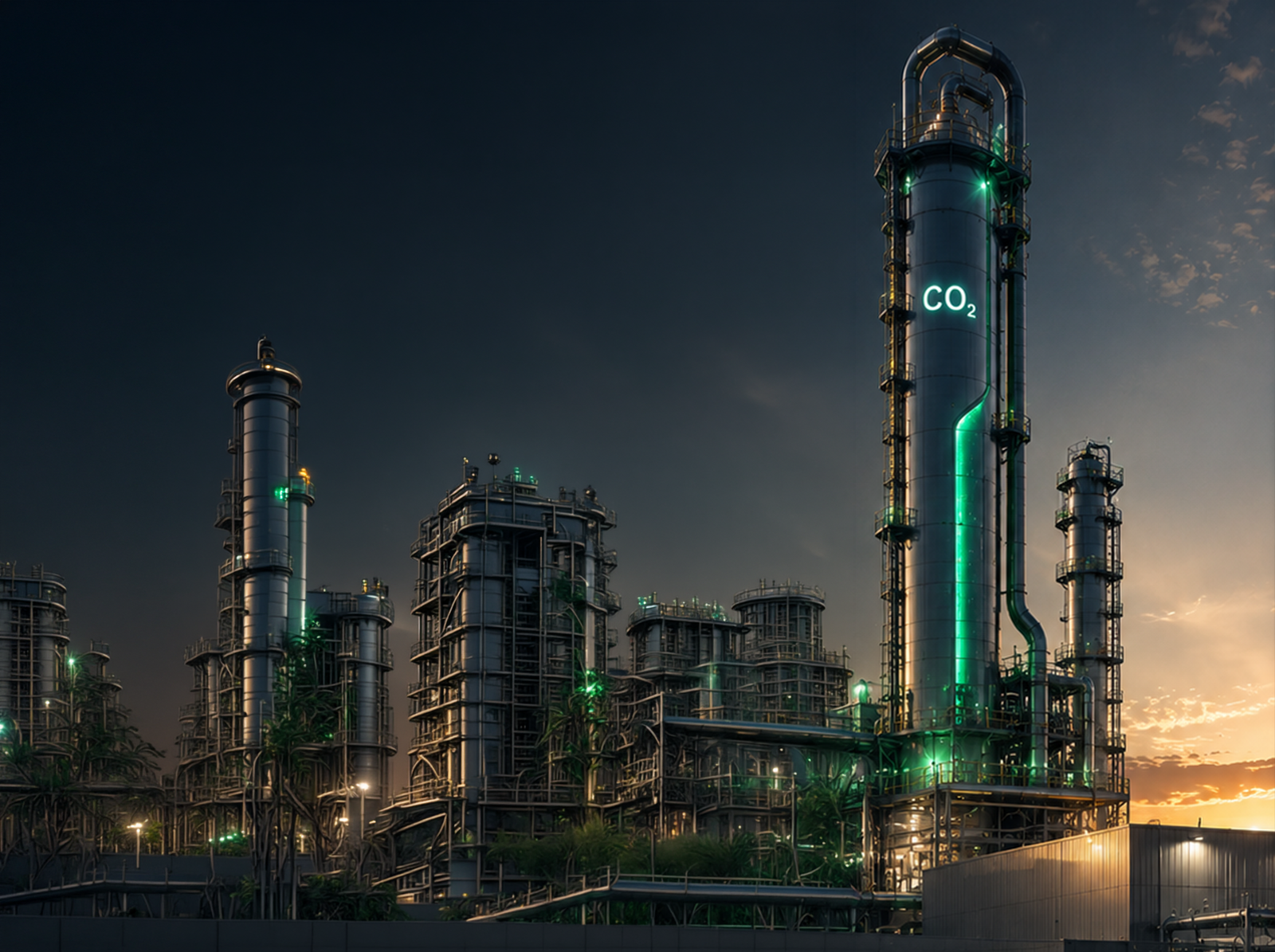
This week, MCI Carbon officially opened a carbon refinery in New South Wales that captures carbon dioxide from Orica’s ammonia production operations and converts it into industrial materials used in concrete, paper, glass, and other manufacturing applications.
The facility itself is relatively small, with a capacity of approximately 2,500 tonnes of CO₂ per year. Yet its significance lies less in its scale and more in the commercial question it seeks to answer: can captured carbon become a profitable industrial feedstock rather than a waste stream?
The Next Chapter of CCUS May Be About Revenue, Not Storage
Much of the global CCUS market remains focused on permanent storage. While sequestration will continue to play a critical role in hard-to-abate sectors, utilization technologies are attracting increasing attention because they offer something many carbon projects struggle to achieve—an economic return beyond compliance.
MCI Carbon’s technology uses mineral carbonation, accelerating a natural process that permanently binds CO₂ into stable mineral products. The result is a carbon-embodied material that can be incorporated into existing industrial supply chains.
For emitters facing mounting pressure from investors, regulators, and customers, this distinction matters. The ability to monetize captured carbon could materially improve project economics and accelerate adoption across energy-intensive industries.
Why Industrial Leaders Should Watch This Closely
The opening of the refinery highlights three broader trends reshaping the carbon management landscape.
Carbon Is Emerging as a Manufacturing Input
Historically, industrial facilities have treated carbon dioxide as an unavoidable by-product. Increasingly, technology developers are positioning CO₂ as a raw material that can be transformed into marketable products.
The long-term opportunity extends beyond emissions reduction. It points toward the creation of entirely new value chains built around captured carbon, particularly in construction materials, chemicals, and advanced manufacturing.
Integration Is Becoming More Important Than Innovation Alone
One of the most notable aspects of the project is its integration with an existing industrial emitter.
The future winners in CCUS may not be the companies with the most advanced capture technology. They may be the organizations that can successfully connect emitters, processors, manufacturers, and end-users into commercially viable ecosystems.
As the sector matures, project economics will increasingly depend on industrial partnerships rather than technology performance alone.
Scale Remains the Critical Test
Like many utilization projects, the technology has already demonstrated technical feasibility. The challenge now is commercial scale.
MCI Carbon is reportedly advancing plans for a larger facility in Austria capable of processing up to 50,000 tonnes of CO₂ annually. Whether projects of that size can consistently produce competitive products at attractive margins will determine how large a role carbon utilization ultimately plays within the broader CCUS market.
A Signal for the Broader Market
Australia’s carbon refinery arrives as governments and corporations search for pathways to meet increasingly ambitious decarbonization targets without compromising industrial competitiveness.
Across the industry, companies are exploring mineralization, synthetic fuels, carbon-derived chemicals, and low-carbon construction materials. The common objective is straightforward: transform carbon from a liability into an asset.
Not every utilization pathway will prove economically viable. Many will struggle with scale, market demand, or cost competitiveness. But the strategic direction is becoming clearer.
The most important development may not be that Australia opened its first carbon refinery. It is that a growing number of companies are attempting to build business models where carbon management generates revenue rather than simply reducing emissions.
For executives evaluating long-term decarbonization investments, that distinction could prove far more important than the capture volumes themselves.