Offshore carbon storage now has its own purpose-built hardware.
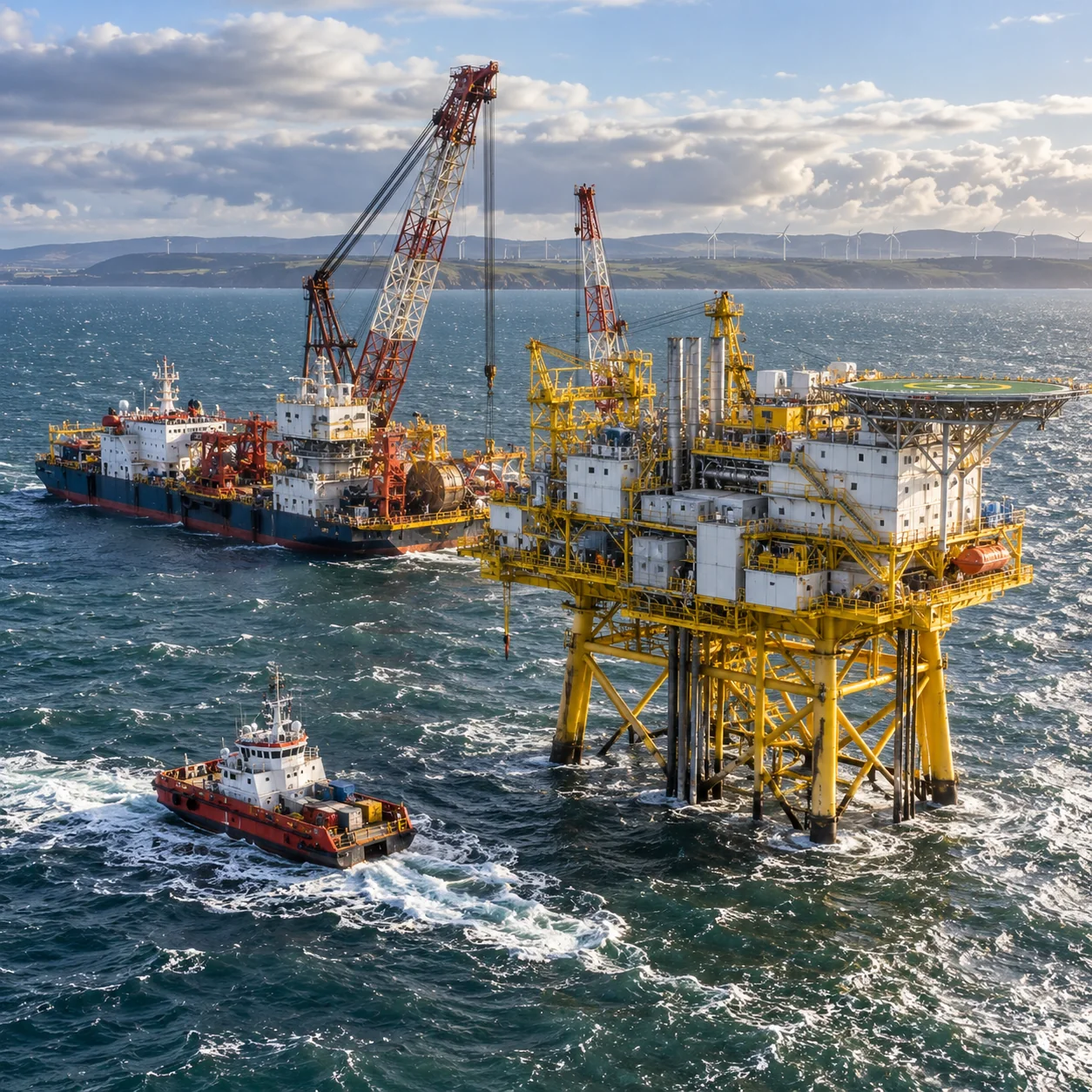
On October 8, 2026, Eni CCUS Holding announced that its project company Liverpool Bay CCS had completed installation of the Douglas CCS platform in Liverpool Bay, off the coast of North West England and North Wales. Eni describes it as the first purpose-built offshore platform dedicated to carbon capture and storage for industrial decarbonisation.
The platform is the offshore hub of the Liverpool Bay CO₂ transport and storage system, which Eni calls the backbone of the HyNet industrial decarbonisation cluster. Eni CCUS Holding is jointly owned by Eni and Global Infrastructure Partners, part of BlackRock.
For carbon management developers in the United States, the project is worth studying closely. It is a working example of how a mature offshore gas province can be turned into permanent CO₂ storage, using a mix of new structures and repurposed assets.
A Platform Built for CO₂, Not Converted to It
Most offshore CCS concepts start with an existing oil and gas platform and ask how much of it can be reused. Douglas takes a different route. According to Offshore Magazine, the new platform replaces the former Douglas Process platform from the original Liverpool Bay oil and gas development.
The numbers give a sense of scale. Eni reports a 1,885 tonne topside, a 1,755 tonne jacket and eight foundation piles weighing 730 tonnes combined. Offshore Magazine adds that the jacket stands 35 metres tall and that the structure was built by Rosetti Marino in Ravenna, Italy.
Speed stands out as well. Eni says the platform was delivered in less than 18 months from contract award, through an accelerated programme that combined engineering, procurement, construction and commissioning.
That matters for an industry where schedule risk often does more damage to project economics than equipment cost.
Reusing the Seabed Infrastructure That Already Exists
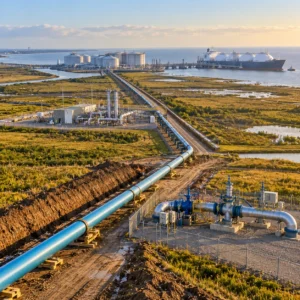
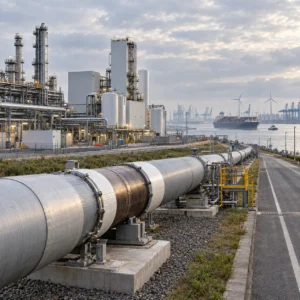
The Liverpool Bay system is designed around assets that once moved natural gas. Offshore Magazine describes the chain: industrial sites capture CO₂, which is sent to the Point of Ayre terminal in North Wales and then through offshore pipelines to Liverpool Bay. New pipeline sections connect to existing subsea lines that are being repurposed, and the CO₂ is injected into depleted gas reservoirs.
The well programme follows the same logic. Injection and monitoring wells are being drilled and re-completed by side-tracking existing production wells, according to the same report. Rosetti Marino is also building new topsides for three wellhead platforms: Hamilton Main, Hamilton North and Lennox.
Offshore Magazine reports that those platforms will inject 109 million tonnes of CO₂ for permanent storage into the Hamilton Main, Hamilton North and Lennox reservoirs.
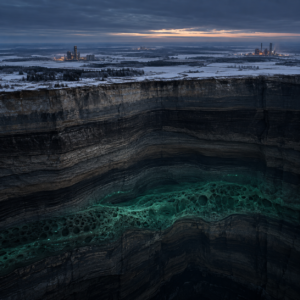
Offshore Technology notes that the project mixes new installations with legacy offshore infrastructure, drawing on existing assets and on detailed knowledge of the depleted reservoirs. That knowledge is one of the less visible advantages of storing CO₂ in former gas fields. Decades of production data describe how the rock behaved under pressure, which helps operators plan injection and monitoring with more confidence.
Halfway Built and Feeding a Regional Supply Chain
Eni says the wider Liverpool Bay CCS network is now about 50 percent complete. Oil & Gas Journal describes the network as halfway complete following the Douglas installation.
The economic footprint is also significant. According to Eni, about 60 percent of total project spending goes to UK supply chains. Construction supports more than 2,000 jobs, and operation is expected to support around 200 to 300 long-term roles over more than 25 years.
Those figures help explain why governments increasingly treat CO₂ transport and storage as industrial infrastructure rather than as an environmental add-on. Shared networks keep heavy industry competitive in its existing locations, and they create long-lived operating businesses in regions that grew up around oil and gas.
Why the Commercial Model Matters as Much as the Steel
Liverpool Bay is a shared system. Emitters across North West England and North Wales will capture CO₂ at their own sites and rely on a third-party network to move and store it. That structure only works if the network operator can finance large upfront assets before every customer is fully committed.
Liverpool Bay is one of the UK’s initial Track-1 CCS projects, and its financing reflects that. Norton Rose Fulbright, which advised the lenders, describes the deal as an innovative regulated asset base financing. Under that kind of structure, the network is treated more like a utility asset than a merchant venture, which gives lenders a clearer view of how the investment will be recovered.
That approach gives the network builder a firmer footing in the early years, when emitters are still completing their own capture projects.
The lessons for US developers are practical. Hub projects along the Gulf Coast and elsewhere face a similar question:
Who carries the risk when the pipeline and storage site are ready before the emitters are?
And how quickly can existing oil and gas assets be put back to work?
What Comes Next for Offshore Storage Hubs
With Douglas in place, attention turns to completing the wellhead platforms, the pipeline connections and the onshore links that bring CO₂ from industrial sites to Point of Ayre. Each step moves the HyNet cluster closer to the point where captured CO₂ becomes a routine industrial flow.
For the wider CCUS market, the project offers a template worth tracking:
- Depleted gas reservoirs with long production histories as storage targets
- Repurposed subsea pipelines to cut new construction
- Side-tracked production wells reused for injection and monitoring
- Purpose-built hub platforms where legacy structures fall short
- Fast-track contracting that compresses fabrication timelines
- Regulated revenue models that reward availability
Mature offshore basins exist on both sides of the Atlantic, and many of them share the same mix of aging platforms, idle pipelines and well-characterised reservoirs. Liverpool Bay shows how that inheritance can be organised into a storage business.
The gas is gone from Liverpool Bay. The infrastructure, the data and the know-how are still there, and now they have a new job.