Rotterdam’s carbon storage system now has a capture plant physically tied into it.
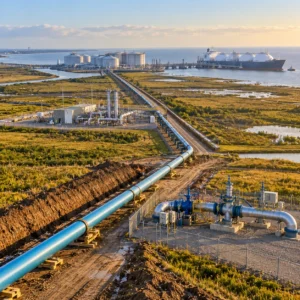
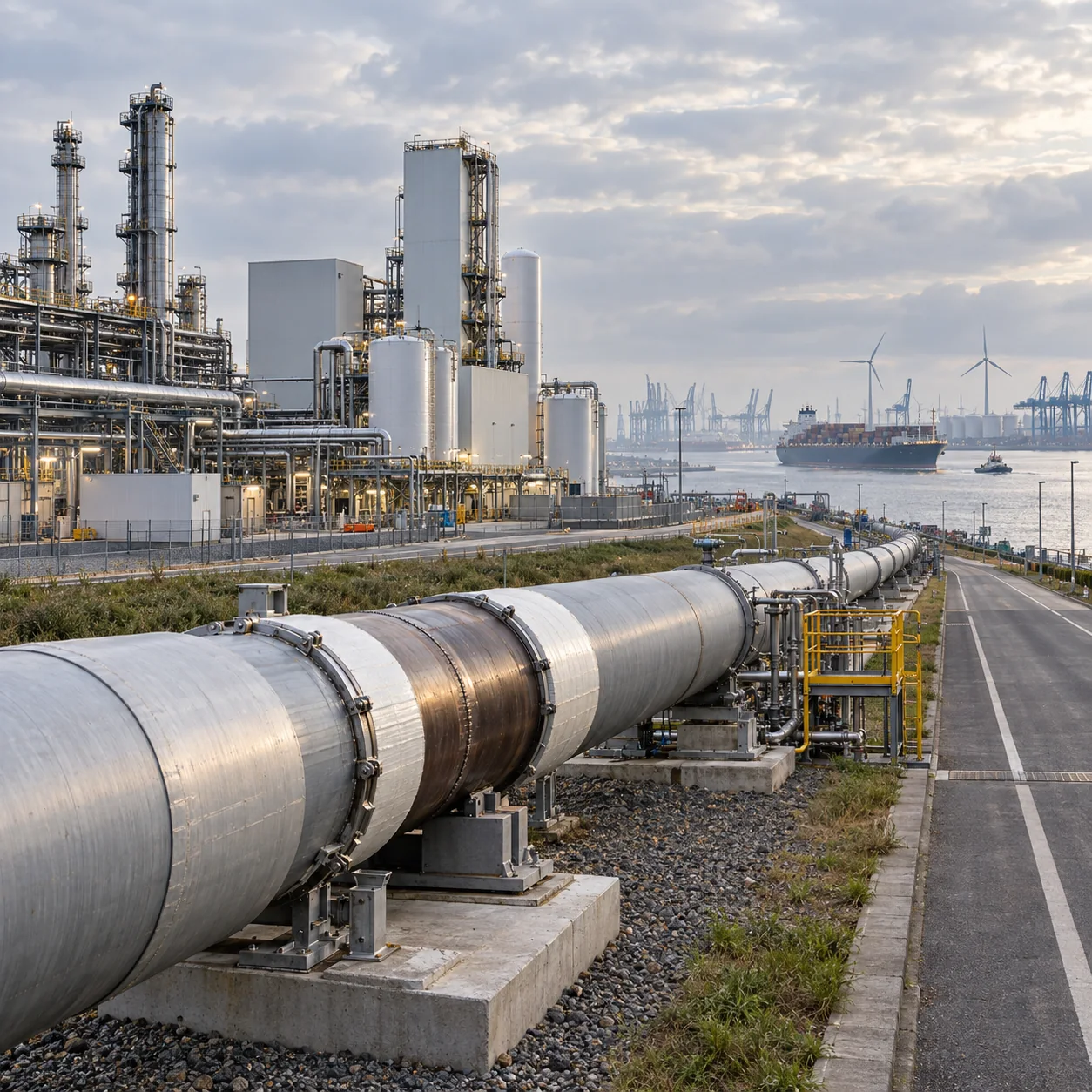
In late September, Air Liquide’s facility at Rozenburg in the port of Rotterdam was connected to the Porthos CO₂ pipeline with a golden weld, the final weld that joins the company’s new capture unit to the shared transport line. According to Porthos, the connection brings capture, transport and permanent storage together in a single chain.
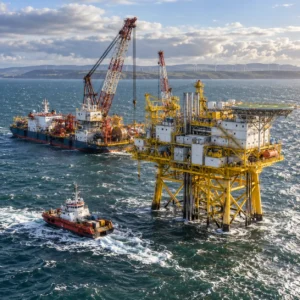
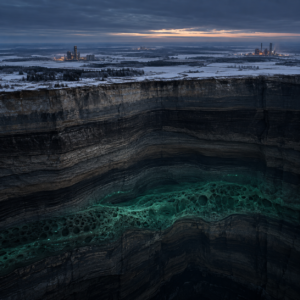
Air Liquide is building the unit around its proprietary Cryocap™ technology at its hydrogen production plant. Once it is running, CO₂ from the site will move through the collective Porthos pipeline to a compressor station on the Maasvlakte, then offshore to the P18-A platform in the North Sea. From there it will be injected into depleted gas fields roughly 3.5 kilometres below the seabed.
Martijn Lub, project manager at Air Liquide, said the connection to the Porthos CO2 pipeline shows what can be achieved through collaboration.
A Weld That Turns Two Projects Into One System
Golden welds are ceremonial, but they mark something practical. Until that point, the capture unit and the pipeline were separate construction jobs with separate schedules and separate risks. After it, they are parts of one operating asset.
Porthos is a joint venture of EBN, Gasunie and the Port of Rotterdam Authority. When it took its final investment decision in October 2023, Porthos put the infrastructure cost at €1.3 billion, supported by a €102 million EU subsidy, with capacity to store 2.5 million tonnes of CO₂ a year for 15 years, or about 37 million tonnes in total. Its first customers are Air Liquide, Air Products, ExxonMobil and Shell.
The rest of the network is closing out around the Air Liquide tie-in. On 17 September, Porthos installed an expansion loop at Edisonbaai on the Maasvlakte that links the onshore and offshore pipelines. The system will carry CO₂ at around 90°C and 130 bar, and the loop absorbs up to 80 centimetres of thermal movement in the line. On 30 September, Porthos reported that construction of its 30 kilometres of 42-inch onshore pipeline, with 11 valve stations, was entering its final phase and heading toward handover.
That sequence matters.
Shared CO₂ infrastructure only earns its keep when emitters are connected and flowing. A pipeline with no capture plants attached is a stranded asset. A capture plant with no pipeline is an expensive science project. Rotterdam is now closing that gap one connection at a time.
Hydrogen Plants Are a Natural First Customer
Hydrogen production from natural gas generates a concentrated CO₂ stream, which makes it one of the more practical places to start industrial capture. Air Liquide describes its Cryocap™ H₂ process as compressing the gas above 20 bar and cooling it to minus 50°C, liquefying the CO₂ so it can be separated and sent for storage.
According to Air Liquide, the Rozenburg unit is expected to cut emissions at the site by approximately 50%. For a hydrogen supplier serving refiners and chemical producers in one of Europe’s largest industrial ports, that is a commercial position as much as an environmental one. Customers under pressure to report lower-carbon inputs will look for suppliers who can document them.
The cryogenic route also travels. In February 2026, Air Liquide and Holcim signed an agreement to apply Cryocap™ OXY at Holcim’s Obourg cement plant in Belgium, targeting 1.1 million tonnes of CO₂ a year, with the CO₂ to be piped to an export hub such as Antwerp@C and shipped to offshore North Sea storage. Air Liquide said that project still needs further partnerships and public support before a final investment decision.
Group Strategy Puts Capital Behind the Energy Transition
The Rotterdam connection lands just ahead of a larger signal from Air Liquide’s headquarters. On 5 October, the company unveiled BEYOND, its strategic plan to 2030, with more than €40 billion of capital allocation over 2026 to 2030 and around €24 billion of industrial investment decisions across four target markets, one of which is the energy transition.
The plan also reaffirmed Air Liquide’s target of a 33% reduction in Scope 1 and 2 emissions by 2035 against a 2020 baseline, and carbon neutrality by 2050. Rozenburg shows how a corporate target becomes physical tonnes: capture at a large, concentrated source, plugged into shared infrastructure someone else is building and operating.
What US Hub Developers Can Take From Rotterdam
Gulf Coast storage hubs face the same sequencing problem Porthos has been working through. Pipelines need committed emitters before they are built, and emitters need confidence the pipeline will be there when their capture units start up. Rotterdam offers a working template for several of those choices:
- Sign anchor customers before committing to the trunk line
- Share infrastructure risk between public and private sponsors
- Design capture units to the pipeline’s pressure and temperature specification from day one
- Start with concentrated CO₂ sources such as hydrogen production
- Bring contractors into design early and allocate risk explicitly
- Plan tie-ins so capture and transport reach completion together
The contracting point deserves attention. In its 30 September account of the onshore build, Porthos described a two-phase contract model that involved the contractor in design and used a risk allocation matrix to manage uncertainty, including when pipe jammed during horizontal drilling beneath the Caland Canal. The lesson Porthos drew was simple: “If the conditions are right, you can solve almost any problem together.”
For US developers working with 45Q economics and Class VI timelines, that kind of contracting discipline can matter as much as the subsurface. Cost overruns and schedule slips on shared pipelines hit every connected emitter at once.
The Next Milestone Is Measured in Tonnes
Both Porthos and Air Liquide have targeted 2026 for operations. With the onshore pipeline nearing handover, the offshore link in place and the first emitter welded in, the remaining steps are commissioning and first injection.
When CO₂ from Rozenburg starts moving, Rotterdam will have shown that a shared transport and storage system can be built in one of the most congested industrial ports in the world, with several large emitters signed on from the start.
Pipelines are built one weld at a time. Carbon markets are built one tonne at a time. Rotterdam is close to counting the tonnes.