Poland has two of the ingredients required for a large CCS market: significant industrial emissions and substantial geological storage potential.
The next challenge is connecting them.
A new Global CCS Institute assessment, Status of CCS in Poland, identifies the country’s industrial demand, storage potential and growing project pipeline while outlining the commercial, regulatory and infrastructure conditions needed to move toward large-scale deployment.
The report estimates Poland’s prospective geological CO₂ storage resource at approximately 10–15 billion tonnes and notes that 18 areas have recently been designated for CO₂ storage exploration. Poland’s industrial sites emitted approximately 42.2 million tonnes of CO₂ in 2024, with significant emissions coming from sectors including cement, refining, iron and steel and chemicals.
The resource is therefore substantial. The infrastructure connecting that resource to emitters is the more immediate development question.
Storage potential needs a transport network
CCS does not end when CO₂ is captured.
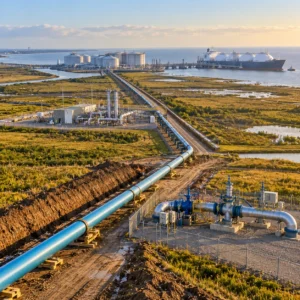
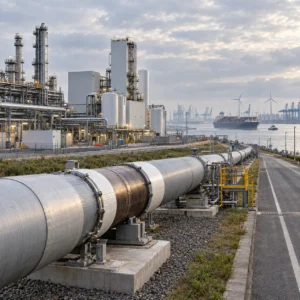
Industrial emitters need a reliable route to storage, whether through pipelines, road, rail or shipping. That makes transport infrastructure a prerequisite for scaling the market.
The Global CCS Institute identifies development of CO₂ transport infrastructure and its regulatory framework as one of the priorities for Poland’s next stage of CCS deployment. It also highlights the need for clear storage permitting and financial mechanisms that improve project bankability.
This is important because individual capture projects cannot necessarily solve the transport problem independently.
A regional network can potentially connect multiple emitters to shared storage infrastructure, creating a larger addressable market for both capture and storage developers.
Poland already has early project activity
The country is not starting from a blank sheet.
More than €250 million in EU funding has already been awarded to Polish CCS projects, with activity developing across capture, transport and storage.
The report’s focus is therefore on the conditions required to connect these individual developments into a functioning market.
That includes a national CCS strategy, clear rules governing CO₂ transport and storage, long-term financial support and further development of storage permitting.
Geological capacity is not the same as usable capacity
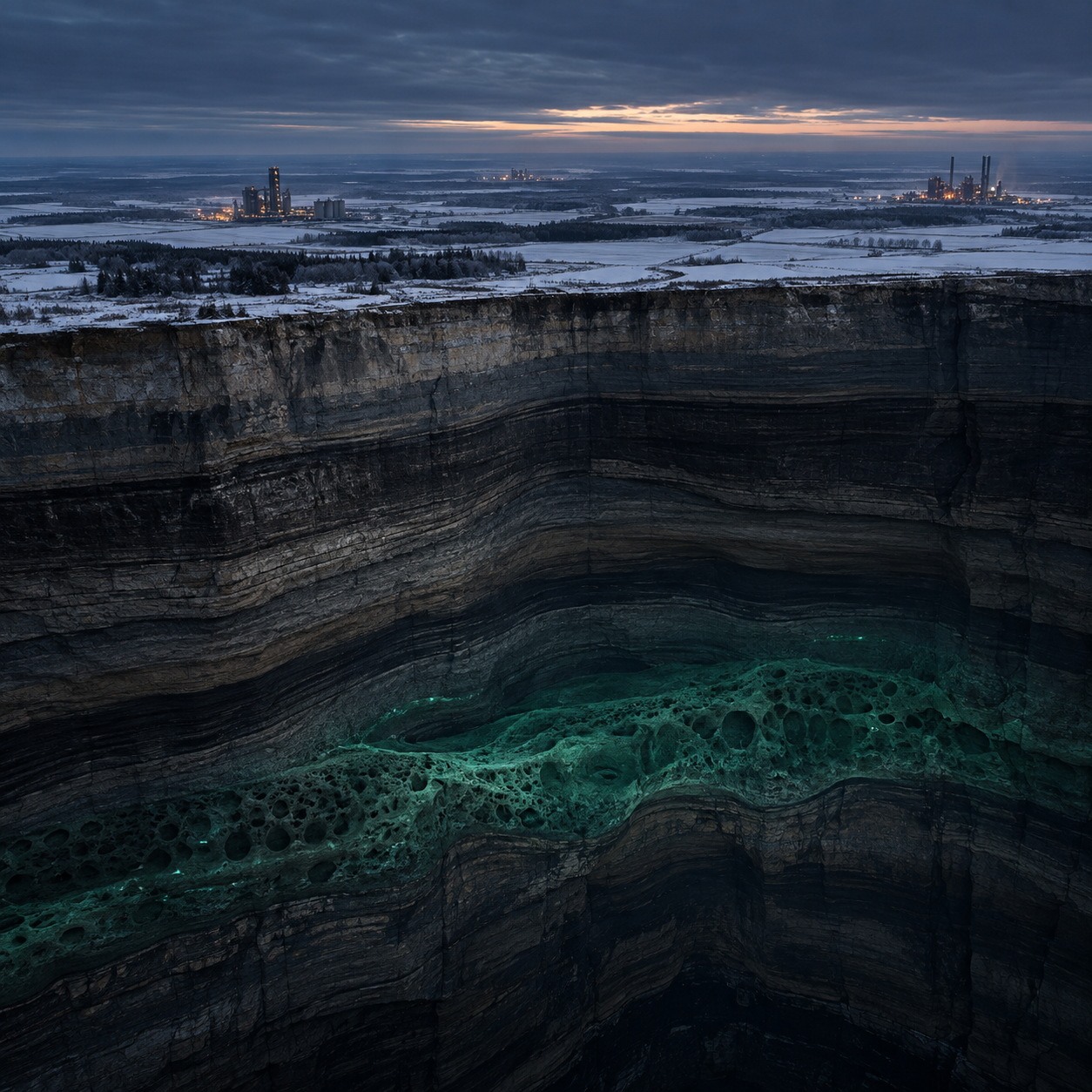
Poland’s estimated 10–15 Gt storage resource is significant, but resource estimates alone do not establish a commercially available storage network.
Storage sites still require exploration, characterisation, permitting and investment. Transport routes must also be engineered around the location and volume of captured CO₂.
Research on northern Poland illustrates this distinction. Studies of potential storage sites identify geological opportunities but also point to uncertainties around reservoir and caprock data, site characterisation, regulatory conditions and infrastructure integration.
For developers, that means storage capacity needs to be evaluated as part of a complete value chain rather than as an isolated geological asset.
The commercial question is becoming more important
Poland’s CCS market now has several of the underlying components: difficult-to-abate industrial emissions, prospective storage resources, early projects and public funding.
What remains is coordination.
A national framework that gives emitters, transport operators and storage developers greater certainty could allow individual projects to be designed around a common infrastructure system rather than as disconnected investments.