
Northern Lights is adding another Swedish customer to its CO₂ transport and storage network, strengthening a model that treats carbon management infrastructure as a shared service rather than a collection of standalone projects.
The company has signed an agreement with Swedish energy company Öresundskraft to transport and permanently store up to 200,000 tonnes of CO₂ per year from the Filbornaverket waste-to-energy plant in Helsingborg. The agreement targets operations from 2029 and will use capacity within Northern Lights’ existing shipping portfolio.
The development is significant because the capture facility, intermediate storage, shipping and geological storage are being connected across national borders.
The infrastructure is being built as a chain
CO₂ will be captured and liquefied at Filbornaverket before being transported by truck to the Port of Halland in Halmstad.
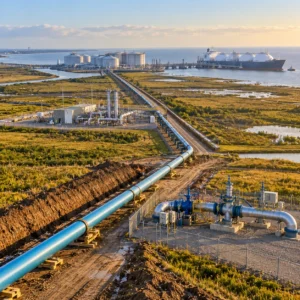
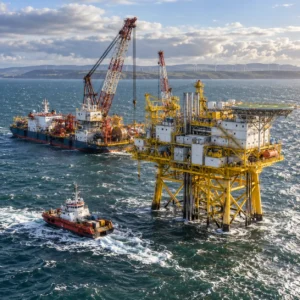
From there, Northern Lights will ship the liquefied CO₂ to its receiving terminal in Øygarden, Norway. The CO₂ will then be transported offshore by pipeline and injected into a geological storage reservoir approximately 2,600 metres beneath the North Sea seabed.
This creates a complete transport-and-storage route without requiring Öresundskraft to develop its own permanent storage infrastructure.
The arrangement also illustrates why CO₂ management is increasingly being approached as a logistics problem.
Capture can occur at one industrial site, intermediate handling at another location, maritime transport across borders and permanent storage in a different country.
Shared infrastructure changes the economics of CCS
Northern Lights describes its model as an open-source CO₂ transport and storage infrastructure.
The Öresundskraft agreement adds to a customer portfolio that now includes seven industrial customers across four countries. Northern Lights is also expanding its annual transport and storage capacity from 1.5 million tonnes to more than 5 million tonnes.
The significance is less about one additional customer and more about aggregation.
A transport and storage network can serve multiple emitters without each project having to develop a dedicated end-to-end chain. As more customers use the same shipping and
receiving infrastructure, the infrastructure itself becomes a platform for additional CCS projects.
That is particularly relevant in regions where individual industrial sites may not have sufficient scale to justify dedicated CO₂ transport and storage systems.
The capture project has now moved closer to execution
The development also has a stronger commercial foundation than a transport agreement alone would suggest.
Öresundskraft has taken a final investment decision for the Filbornaverket CCS project. The company expects construction to begin toward the end of 2026, with planned operation in 2029. The project is designed to capture approximately 200,000 tonnes of CO₂ annually, with an investment of SEK 2.4 billion before grants.
The project has also received support from the EU Innovation Fund and Sweden’s Energy Agency.
That means the infrastructure chain is progressing across several layers simultaneously: capture, intermediate storage, transport and permanent storage.
The wider implication for European CCS
The Nordic model is becoming increasingly relevant to European CCS development because storage geology and industrial emissions are not necessarily located in the same country.
A functioning market therefore requires more than capture technology. It requires CO₂ logistics, cross-border arrangements, storage capacity and commercial contracts that connect emitters to storage.
Northern Lights’ growing customer portfolio provides an example of how that infrastructure could be shared.
For CCS developers and capital providers, the question is increasingly shifting from whether an individual capture project can operate to whether it can connect economically to a reliable regional CO₂ network.
That network layer may ultimately determine how quickly individual capture projects can move from engineering plans to operating assets.