Texas has taken another significant step toward building a large-scale carbon capture and storage network along the Gulf Coast.
The Railroad Commission of Texas approved ExxonMobil’s Rose Carbon Capture and Storage project in Jefferson County by a 2–1 vote. The project is designed to permanently store up to 53 million metric tons of CO₂ over 13 years, with three Class VI injection wells targeting the Fleming and Upper Frio formations.
The approval matters beyond the capacity of a single storage site.
Rose is being developed as part of ExxonMobil’s broader Gulf Coast CCS network, connecting industrial emitters to shared CO₂ transportation and storage infrastructure. The model points toward a larger shift in the U.S. CCUS market: from individual capture projects toward interconnected carbon infrastructure.
For project developers, industrial emitters and investors, that shift could be just as important as the storage capacity itself.
Rose Puts Dedicated CO₂ Storage at the Center of the Network
The Rose project is located approximately 15 miles southwest of Beaumont, Texas, across more than 13,000 acres of privately owned land.
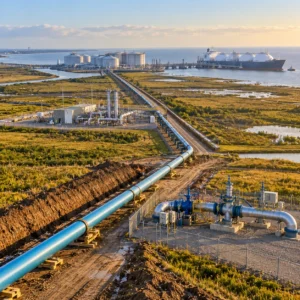
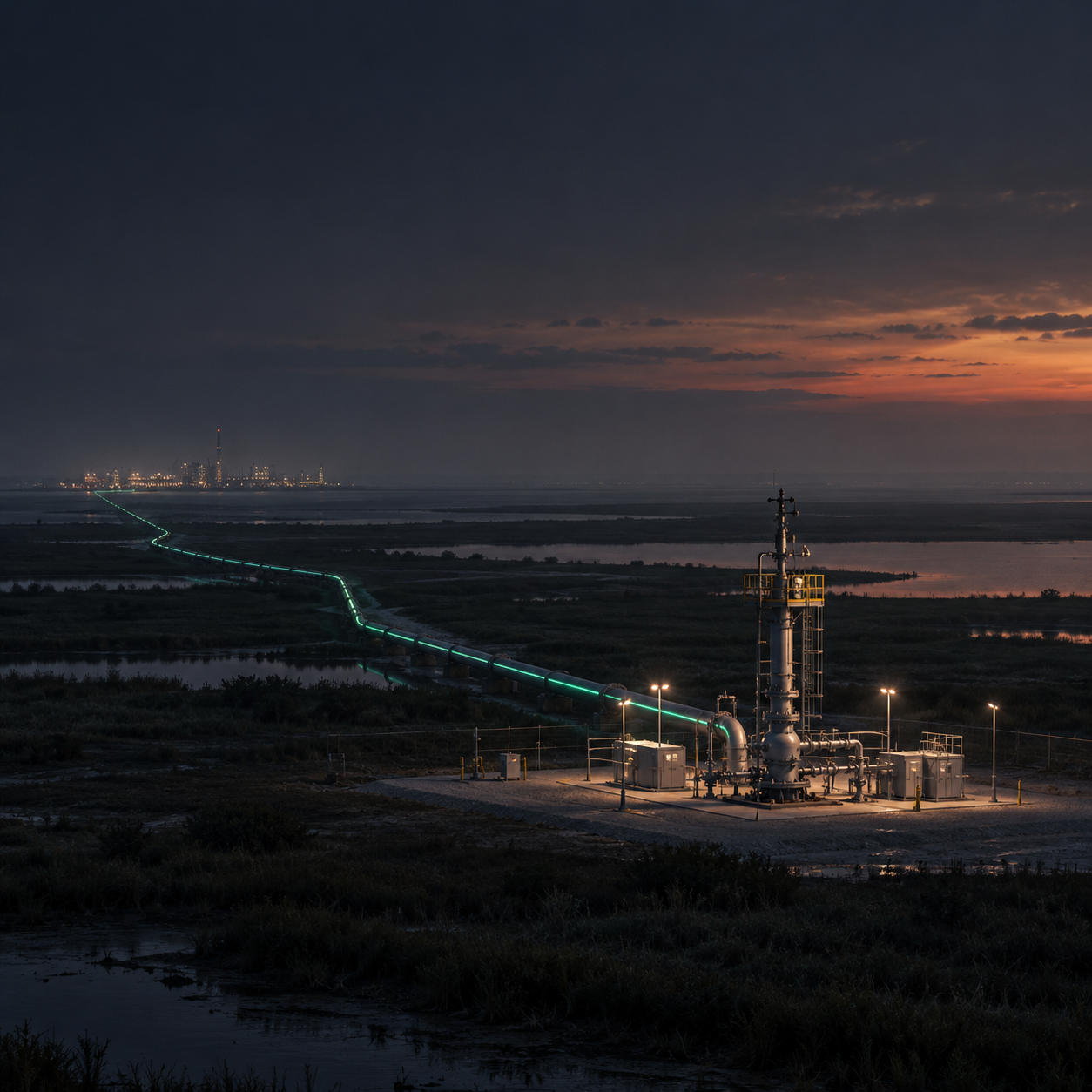
ExxonMobil plans to inject approximately 4 million metric tons of CO₂ per year, with a permitted cumulative storage volume of 53 million metric tons over the 13-year injection period. The project includes three injection wells, supported by monitoring infrastructure and an 18-mile pipeline connecting the storage site with industrial sources.
The CO₂ will be injected between approximately 3,400 and 7,525 feet underground into the Fleming and Upper Frio formations. The permit requires monitoring throughout the injection period and for 50 years after injection ends, or until regulators approve a demonstration that underground sources of drinking water are no longer endangered.
The technical architecture is important because permanent geological storage is becoming one of the critical pieces required to turn carbon capture into a functioning industrial system.
Capture alone does not create a CCUS business.
Captured CO₂ needs a destination, transportation infrastructure, pore-space rights, regulatory approval and a long-term storage pathway.
Rose addresses one of those bottlenecks.
Texas Is Now Testing Its Own Class VI Permitting Framework
The Rose approval also represents a significant regulatory milestone for Texas.
The project was the first major contested carbon-storage permit decided by Texas regulators after the state assumed responsibility for Class VI permitting from the U.S. Environmental Protection Agency.
The Railroad Commission’s approval followed a multi-stage review and public hearing process. Commissioners Christi Craddick and Jim Wright voted for the permit, while Commissioner Wayne Christian voted against it, citing unresolved questions about long-term safety and monitoring.
The disagreement highlights an issue that will become increasingly important as more projects seek approval: how regulators, developers and communities establish confidence in long-term geological storage.
The technical questions around containment, groundwater protection, monitoring and emergency preparedness are not peripheral to CCS development. They are part of the infrastructure investment case.
ExxonMobil has emphasized geological characterization, monitoring and community engagement as part of its approach to Rose. The company says its CCS team has engaged with more than 10,000 people through more than 450 events across Texas, Louisiana and Mississippi since 2024.
The Bigger Opportunity Is the CO₂ Network
The more consequential element of Rose may be how it fits into ExxonMobil’s existing Gulf Coast infrastructure.
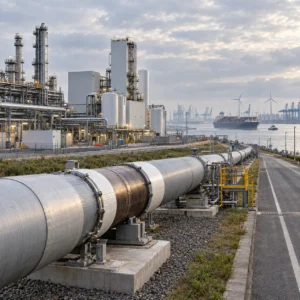
ExxonMobil’s acquisition of Denbury brought more than 1,300 miles of CO₂ pipeline infrastructure into its portfolio. The company is developing a network designed to connect multiple industrial emitters with multiple storage locations.
That creates a different proposition for companies considering carbon capture.
An industrial facility does not necessarily need to develop its own storage site, build a dedicated pipeline or establish a complete downstream CO₂ chain. Instead, it can potentially connect into shared infrastructure.
This hub-and-network model could become particularly relevant for Gulf Coast industries with concentrated emissions, including hydrogen, ammonia, refining, chemicals, steel and power.
The commercial question therefore shifts from:
Can this facility capture CO₂?
to:
Can this facility connect economically and reliably to a functioning CO₂ network? That is a much broader infrastructure question.
Industrial Customers Are Already Creating Demand
The network is also beginning to move beyond the development stage.
ExxonMobil has announced CCS agreements with multiple industrial customers across the Gulf Coast. Its customer portfolio includes CF Industries, Linde and Calpine, among others.
CF Industries’ Donaldsonville complex in Louisiana has been sending captured CO₂ into ExxonMobil’s system, with the company targeting up to approximately 2 million metric tons of CO₂ per year.
ExxonMobil also recently began capturing, transporting and storing CO₂ from Nucor’s direct reduced iron facility in Louisiana. The project is designed to handle up to approximately 800,000 metric tons of CO₂ per year and represents ExxonMobil’s third operational CCS project serving a third-party customer.
These projects illustrate why transportation and storage infrastructure can become a commercial enabler.
As more emitters commit to capture, the value of shared infrastructure increases. As infrastructure expands, additional emitters have a potential pathway to connect.
That creates the foundations of a network effect for CCUS.
Rose Is One Piece of a Larger Texas Storage Pipeline
Rose is not the only Texas storage project moving through the regulatory system.
The Railroad Commission’s public records show additional Class VI projects at different stages of development.
Occidental’s Bluebonnet project, for example, has reached the draft permit stage and is designed for substantial long-term storage. Oxy’s Brown Pelican project is intended to store CO₂ associated with 1PointFive’s STRATOS direct air capture facility in West Texas. Other
projects involving companies including Chevron, TotalEnergies and Equinor are also progressing through the Texas permitting process.
The emergence of multiple projects matters because a functioning CCUS ecosystem ultimately requires more than one storage destination.
Multiple storage sites can provide greater flexibility for emitters, while shared pipeline systems can potentially connect sources across industrial clusters to different geological formations.
That is the infrastructure model that could determine how quickly Gulf Coast CCUS scales.
The Next Milestone Is Not Another Permit
Rose’s approval is significant, but the project is not yet injecting CO₂.
The next stage involves completing well construction, satisfying pre-injection requirements and obtaining the separate authorization required to begin injection.
That distinction matters.
The CCUS industry has accumulated a substantial pipeline of announced projects. The next test is increasingly whether those projects can move through permitting and construction into operational infrastructure with contracted volumes and predictable storage performance.
For Rose, customer connections along the 18-mile pipeline will be an important milestone to watch as the project progresses.
The same applies across the wider Gulf Coast.
What Rose Means for the CCUS Market
The Rose approval brings several parts of the CCUS value chain into one project:
Capture from industrial facilities
Transportation through dedicated CO₂ pipelines
Storage in deep geological formations
Monitoring across the injection and post-injection lifecycle
Commercial contracts connecting emitters to storage capacity
Regulation through Texas’ new Class VI permitting authority
That combination makes Rose more than a storage project.
It is a test of whether the Gulf Coast can develop the infrastructure required for CCUS to operate as a connected industrial service.
For companies evaluating carbon capture investments, the question is increasingly not whether capture technology exists. It is whether the surrounding ecosystem is ready.
Texas is now putting that ecosystem to the test.
The next phase of CCUS will be defined not simply by how much CO₂ can be captured, but by how efficiently, safely and economically it can move from industrial facilities into permanent storage.
And with Rose now approved, the Gulf Coast has another major piece of that infrastructure moving toward execution.