The conversation surrounding carbon capture and storage (CCS) in the United States has officially shifted from regulatory frameworks and theoretical potential to physical, operational infrastructure.
California Resources Corporation (CRC) and Brookfield have announced the first landmark CO2 injection at Carbon TerraVault I (CTV I) in Kern County, launching California’s first operational carbon capture and storage project.
By moving a major utility-scale project from concept into active underground sequestration, this milestone transitions the West Coast market out of the planning phase and directly into the era of commercial execution.
Anatomy of an Operational CCS Project: Elk Hills Field
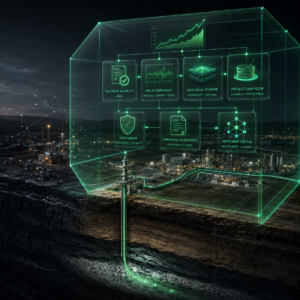
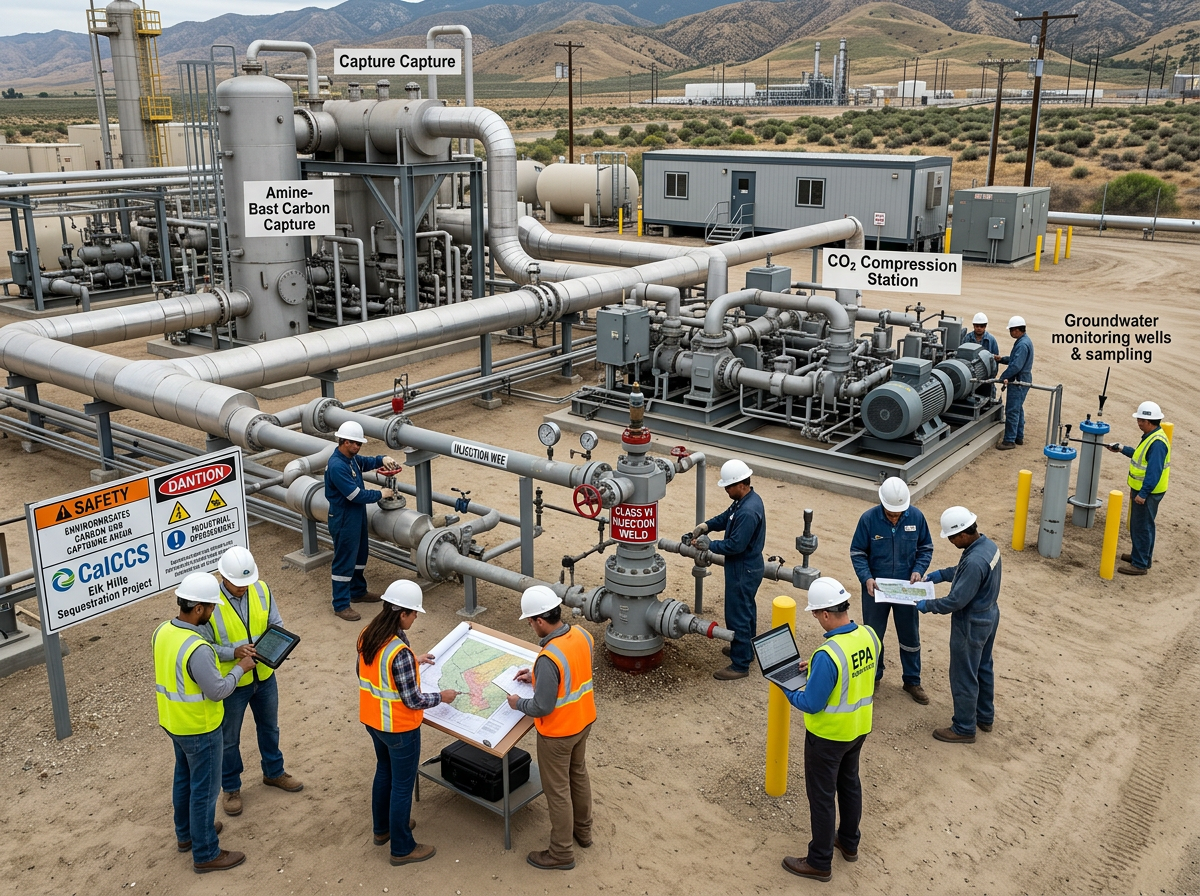
The project captures carbon dioxide directly from CRC’s cryogenic gas processing plant. Rather than allowing these emissions to enter the atmosphere, the CO2 is compressed and transported for permanent geological storage more than one mile beneath the surface at the Elk Hills Field.
The storage architecture of CTV I relies on two heavily characterized, depleted oil and natural gas reservoirs known as 26R and A1-A2. These subsurface structures safely contained hydrocarbons for millions of years, proving their long-term geologic integrity and making them optimal formations for secure carbon containment.
Core Metrics of the CTV I Asset:
- Target Annual Injection: At full operating capacity, the single 26R reservoir is engineered to permanently sequester up to 1.46 million metric tons of CO2 per year.
- Environmental Impact Equivalent: This single-reservoir volume represents the atmospheric equivalent of removing nearly 350,000 cars from the road annually.
- Total Site Potential: The combined storage ceiling for the initial CTV I asset reaches 38 million metric tons.
The Class VI Regulatory Breakthrough
For infrastructure executives tracking the Western energy transition, the most critical element of the CTV I launch is its regulatory path.
The 26R asset stands as the first reservoir in California history to successfully secure final Class VI carbon storage permits from the U.S. Environmental Protection Agency (EPA). The EPA’s Class VI framework enforces strict compliance baselines regarding groundwater protection, subsurface containment safety, and sophisticated long-term data monitoring.
Securing this sign-off creates a vetted operational blueprint for project developers aiming to deploy capital into regional carbon capture and storage networks.
Scaled Pipeline: Expanding the California Network
The first injection at CTV I is not a siloed achievement; it serves as the anchor point for a massive regional storage strategy.
The Carbon TerraVault joint venture (owned 51% by CRC and 49% by Brookfield) is moving immediately on an aggressive expansion pipeline:
- 8 Additional Reservoirs: CRC has already advanced eight secondary storage formations into the EPA’s Class VI permitting queue.
- 352 Million Tons of Capacity: If approved, these proposed sites expand the joint venture’s future storage capacity to an estimated 352 million metric tons across California, creating an institutional-grade network for third-party industrial emitters.
Macro Outlook: Hard-to-Abate Demands & Community Capital
State regulators, including the California Air Resources Board (CARB), have increasingly codified carbon capture and storage as an irreplaceable mechanism within the state’s broader climate strategy. While aggressive emissions reductions remain primary, industrial point-source capture provides a practical, scalable pathway to address heavy refining, energy production, and manufacturing sectors that cannot be easily decarbonized via renewable electrification alone.
To secure long-term regional alignment, the project’s rollout includes an active localized investment framework. CRC is directing over $1 million into community benefit initiatives in Kern County and establishing an independent Community Advisory Council. This council will ensure local stakeholders directly guide regional engagement and community programs as industrial-scale carbon management scales across the region.
For the broader US energy infrastructure market, CTV I delivers a definitive proof of concept: with rigorous engineering, tight state-federal coordination, and structured capital, commercial-scale geological sequestration is no longer a future projection. It is online.